Preaching and Politics

My book Preaching for Life has a chapter entitled: “Addressing Social and Political Issues.” I don’t pretend to have this issue completely figured out, but I do speak as one who has seen political leaders come and go (both here and during my time as a missionary in the Philippines). The chapter includes what I believe to be valuable questions for the preacher to consider when he steps into the pulpit. I’ll share them:

Will I come across as campaigning instead of preaching?

I am currently the pastor of a multiethnic, intergenerational church. I have members that vote differently than I do, and I’m fine with that. They are every bit my brothers and sisters in Christ as those who vote more like I do. Here’s my primary concern about getting political from the pulpit: I never want someone to come to my church and get the impression that I’m more interested in influencing their vote than I am in the state of their souls. The pulpit is for the proclamation of the gospel—it is not the place for me (or you) to promote political candidates or parties.

Will what I’m about to say age poorly?

I remember attending a church service around the time of Desert Shield (a military operation in which the US and her allies expelled Saddam Hussein’s Iraqi forces from Kuwait). The preacher began (loudly) arguing that the US should have invaded Iraq and gotten rid of Hussein once and for all. (I can’t remember if there were any “amens.”) To be clear, this was not my pastor—I believe we were having some kind of community service in which a pastor from another congregation spoke. That preacher did get his wish, for better or worse, about ten years later. But thinking about that message now causes me to scratch my head. I don’t recall the message including anything about what was supposed to happen after Hussein was ousted. Who would be the new leader? What kind of government would be adopted by or imposed upon the country? How would the Sunni and Shia Muslims get along if Hussein were ousted? These were all issues the international community had to deal with after Desert Storm (a military operation in which Iraq was invaded). I’m not here to argue for or against the invasion of Iraq. My point is that the preacher should have stuck to the word of God and not used the pulpit for his political rants.

More recently, I remember some so-called “prophets” incorrectly predicting the outcome of the 2020 presidential election here in the United States. Biblically speaking, that makes them false prophets (Deuteronomy 18:22). They have permanently disqualified themselves from preaching, though I suppose most of them will continue blowing hot air for years to come.

These may be extreme examples, but they point to something we should all consider—how would this sermon sound if someone listened to it five years from now? Twenty years from now? Applications and illustrations may change, but God’s proclaimed truth should be timeless!

Is the Bible clear about this topic?

Like it or not, the Bible doesn’t clearly say what the corporate or income tax rate should be. I have my own opinion on this issue, just like you. But this is an example of an issue that is not explicitly addressed in the scripture (at least, not as explicitly as some claim). I cannot say, “Thus says the Lord” on these and many other public policies.

There are issues that the Bible is perfectly clear about. Consider this statement from Genesis:

So God created man in his own image, in the image of God he created him; male and female he created them.

-Genesis 1:27

I am completely convinced, based on God’s word, that people are made in God’s image and are therefore valuable. I have no qualms about calling abortion evil (which I have done from the pulpit) since it is the taking of a human life made in God’s image. This verse also teaches that God created us male and female. This biological reality was not the least bit controversial until recently. I have on more than one occasion stated that radical gender ideology is rebellion against the clear design of our Creator and is destructive—especially in the way it is impacting this generation of children.

I don’t consider it a political statement when I preach on abortion, gender ideology, or homosexuality. I consider these biblical truths that have political implications. These may be controversial issues in the sphere of public debate, but they are settled in God’s word, and we should unapologetically preach about them from the pulpit.

Am I elevating my political party or candidate’s ideology above the word of God?

I have strong Libertarian (not to be confused with liberal) tendencies in terms of how I view the role of government. But Libertarians have a saying that I can’t fully endorse: “Taxation is theft.” I know taxation sure feels like theft, but Jesus said this when asked about taxes: “Therefore render to Caesar the things that are Caesar’s, and to God the things that are God’s” (Matthew 22:21b). Based on my Lord’s words, I believe the government has the right to impose taxes. That means I can’t completely embrace and repeat (or repost) every slogan that comes from Libertarian websites or social media accounts. I mentioned this to my congregation when I preached on Matthew 22:15-22.

Just to be clear, I’m not saying that Jesus’ words mean we have no right to influence our tax system—that’s what voting and political involvement are for. I’ll go further and say it’s perfectly legal and within your rights to voice your concerns about high taxes, unfair taxes, or misuse of government funds. But what we must not do is embrace any political mantra or ideology that contradicts the clear teachings of scripture.

Will I come across as having selective righteous indignation?

We all have our political biases, and these biases can cause serious inconsistencies in our praise or criticism of politicians (or political parties). I’ve seen well-known Christian leaders/authors write extensive criticism of one president, then treat the next president with kid gloves. Perhaps there is a time and place to criticize the actions of politicians, but I believe we should be as fair and consistent as possible. This is one of the many reasons I typically do not praise or bash politicians from the pulpit or even from my social media accounts. Kevin DeYoung has offered some wise words in this regard:

Only rarely will it be worthwhile for pastors to weigh in on some political matter immediately (other than lifting up many things to God in our public and private prayers). I don’t regret trying to address topics like abortion, transgenderism, race, or homosexuality, even if these can be called “political” topics. I do regret the times I’ve jumped in too quickly into the news cycle or offered my opinion too freely on individual politicians, if for no other reason than once you set yourself up as “a guy who comments on things all the time,” people can reasonably wonder why you comment on some things and some people and not on others.

Am I modeling civil discourse (including my life away from the pulpit)?

I have encouraged my congregation to talk about policies instead of personalities when it comes to political discussions. It takes zero effort to find a meme of your most hated politician in diapers and share it online. But we, God’s people, should show more respect and maturity. We should focus on clearly articulating what we value instead of engaging in the typical mindless online mudslinging that is all too common in today’s world.

These questions are an excerpt from Preaching for Life: A Pastor’s Journey of Biblical Proclamation. The book is available in both Kindle and hard copy formats.

Preaching for life cover

Preaching for Life (My New Book)

I’m excited to announce the publication of my new book!

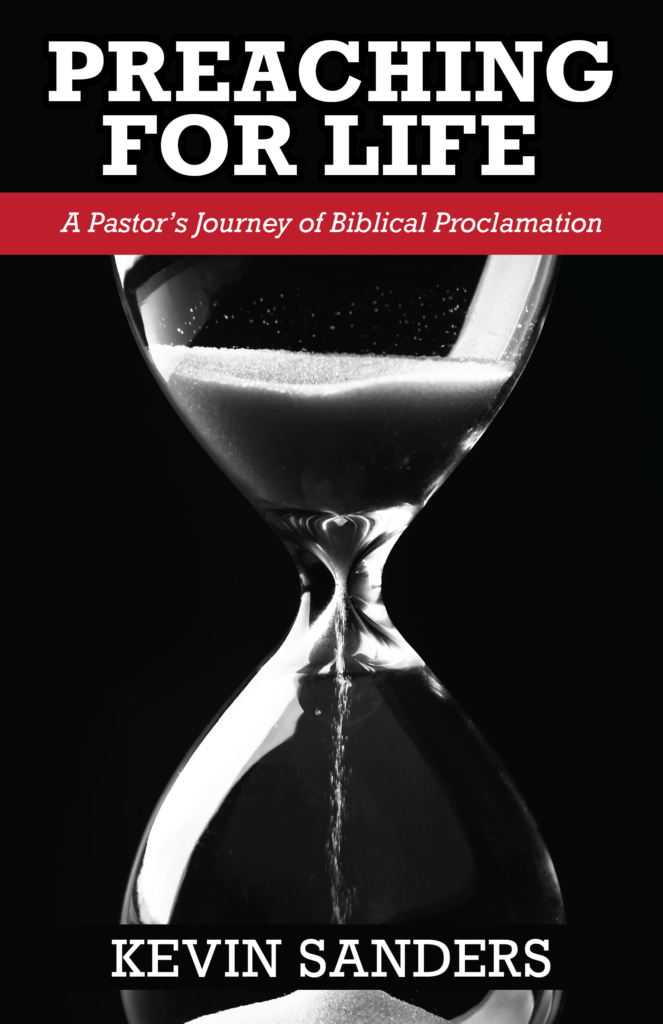
The title is Preaching for Life: A Pastor’s Journey of Biblical Proclamation.

Preaching for life cover

As with any project, this has been a team effort. I’m deeply grateful to everyone who has contributed and helped make this happen. I want give special shout-outs to my friends Mary Ann Fortner for proofreading and Erwin Cabalang for the cover design (more names are in the Acknowledgements section at the end of the book).

I’d also like to thank PublishingServices.com for the excellent formatting work.

Here’s the book description:

What do I wish I knew about preaching when I was first called into ministry years ago? What advice would I give to someone who has just begun preaching? How can you be sure you’ll have something to preach on every Sunday? I answer these and other questions in Preaching for Life. I pray this book will help you start well and finish strong in your ministry of biblical proclamation.

Topics include:

  • Preaching by the Book
  • Using Illustrations
  • Using Humor
  • Preaching Holidays
  • Preaching Funerals
  • Preaching Authentically
  • G-rated Preaching in an X-Rated World
  • Addressing Political and Social Issues

Also Included:

  • Three Sermon Summaries
  • Six Devotionals for Pastors

How to Order

This book is available through Amazon in both Kindle and hard copy formats.
How you can help

  • Pray that this book would be used to equip and encourage preachers.
  • Order the book if you are a interested in the topic.
  • Please leave a positive review on Amazon if you think it deserves it.
  • Last but not least, please share this post on your social media accounts or invite me to podcasts/Youtube interviews.

Here’s a preview: the book’s introduction (Page 11-17).

Introduction

I grew up in Pinson, Alabama, a small town located about 20 miles northeast of Birmingham. My dad was a high school principal, and my mom was a homemaker. Dad is now retired, and Mom went home to be with the Lord in 2012. I have one older brother, Hoyt who, coincidentally, was the first mayor of our town (It officially incorporated in 2004).

I was blessed with a rich spiritual heritage that was passed down from both sides of my family. My maternal grandfather was a lay preacher who, despite his limited education, was a gifted writer and speaker. I’ll always believe I inherited my knack for writing from him. My paternal grandmother attended and served at First Baptist Pinson (my home church) starting from the days of her youth. Dad faithfully served as a deacon in this same church. Mom and Dad brought us every time there was a worship service, prayer meeting, or activity.

I started to become uneasy about the state of my soul when I was eight years old. We often describe this state as being “under conviction”—being aware of one’s sinfulness. I became increasingly uncomfortable during the altar calls that happened at the end of every worship service. I knew that I needed to make a personal decision about Jesus Christ, but I was hesitant: Walking down a church aisle was a frightening proposition for an extremely shy little boy like me.

My church hosted a revival around this time, meaning we had church services (and agonizing altar calls) for a week straight. The invitation/altar call was exceptionally long one night because people kept responding. I finally couldn’t take it anymore. I released my death grip on the pew (probably around the 80th stanza of Just as I Am) and went forward to the preacher. “I want to be a Christian,” I told him.” “Do you know you are a sinner?” he asked. I didn’t know much theology, but I knew the answer to that question. That night I surrendered my heart to Jesus Christ and was overwhelmed by a sense of renewal and peace. I held back tears. I wish I hadn’t. I was baptized a week or two later.

I became aware of my need to take the Lord more seriously during high school. I did what many would call a rededication of my life, though this time I didn’t make it public. I had seen people make such public rededications over the years, and many of them never demonstrated any real repentance or change. I wanted to show my newfound commitment by the way I lived: I wanted people to see that God was changing me.

I began sensing God calling me to ministry around this time. I was willing to do whatever God wanted, but I found it strange that He would call me to preach. Remember how I mentioned my shyness? I found the idea of public speaking completely terrifying. Regardless, I shared this sense of calling with both my parents and my pastor.

I’m especially grateful for my parents’ response when I told them God was calling me to ministry. They told me to do whatever God was telling me. Their advice reminds me of Eli’s instructions to a young Samuel when the Lord first called him (1 Samuel 3:9). Thinking about it nearly brings me to tears (nearly—but bawling out loud here in a public coffee shop might be awkward).

I also shared this sense of calling with my pastor, Dr. Gary Fisher, and my youth pastor, John Nicholson. They, like my parents, were very encouraging. Dr. Fisher eventually invited me to preach to our congregation on a Wednesday night. I vividly remember that first sermon. I silently prayed this before nervously starting my message: “God, this is the dumbest thing I’ve ever done in my life. It’s your fault if this is a disaster because I never would have attempted this if you hadn’t told me to.” Fortunately, the sermon was not a complete disaster. It went reasonably well as far as first sermons go. I even remember a fellow teenager coming up to me after the message and saying, “I think you have found your calling.” Having said that, I’m thankful my sermons from those early years only survive as cassette tapes some- where in my dad’s basement.

I went on to attend college and was heavily involved in campus ministry. But this is where my path to becoming a pastor diverges from that of many men. Most of the pastors I know met their wives in college (or soon after), married young, and began serving churches while attending seminary. I thought that’s how it would turn out for me, but the younger version of me had no idea of the international adventures that were ahead.

I spent the rest of the 90s working as a substance abuse counselor while studying in seminary (my undergrad degree is in social work). I earned my Master of Divinity and eventually applied to be a missionary through my denomination. This would lead to the next season of life and ministry, which was truly amazing.

I became a missionary to the Philippines in July of 2002. I spent most of my time there doing ministry with college students. I could write another book about those incredible eleven years (2002-2013). But I’ll focus instead on how those years relate to my current season of life as a pastor.

I was never a senior pastor in my eleven years in the Philippines. I did speak and preach to groups (both large and small), but I was never responsible for the kind of week-to-week preaching that I do now that I’m a pastor. My ministry tended to be repetitive in nature: I repeated the same gospel presentation countless times to college students. I presented the same seminar (based on the True Love Waits material) at multiple college campuses and churches. I even tended to preach on the same text when I was back in the States, sharing about my life as a missionary (John 4:1-26 was one of my favorites).

I met Mare Cris, my beautiful wife, towards the end of my time in the Philippines. We married in 2012 and began the process of acquiring her spousal visa soon after. We moved to the States in July 2013. I had the opportunity to preach in a few churches in the Birmingham area, sometimes for one Sunday and sometimes for a few weeks.

I must confess that I was initially intimidated by the thought of preaching in American churches. Why? My ministry in the Philippines was geared towards young Filipinos, most of whom had never participated in a Bible study. It was not unusual for me to tell some of them the page number of the passage we were studying so they could find it in their New Testaments. Now I was preaching to congregations with members who had been listening to sermons since before I was born. But God made it clear that I was to be a pastor in this next season of life. There’s a devotional later in this book called The Ministry of Reminding—there, you can read a few more reflections on the transition from missionary to pastor as it relates to preaching.

This itinerate ministry went on for three (long) years before we found a long-term place of ministry. I became the pastor of Apollo Heights Baptist Church (El Paso, Texas) in October of 2016. I knew God had called me to preach, and I knew God had called me to this church. I had been blessed with excellent theological training and had a pretty good grasp of how to prepare sermons. I had a handful of sermons that I had developed and preached over the years. (We preachers call these favorite sermons “sugar sticks.”) I had also preached a few sermons through the Book of James during the three-year itinerate ministry phase. But I was still quite inexperienced in terms of week-to-week, month-to-month pastoral preaching.

I have shared my testimony and ministry background so you’ll have some idea of who I am and the perspective I bring to the subject at hand. I have now been on this preaching journey for over eight years. I realize that may still make me a rookie in the eyes of more veteran pastors. I don’t claim to have mastered gospel preaching any more than I would claim to have mastered the Bible. But I have learned lessons that I believe to be worth sharing. I will cover some of the basics of exegesis (properly interpreting the Scripture), but I am hoping this book will also help with other topics that may not have received quite as much attention.

Preaching for Life has a double meaning. I want to help you as you prepare and preach messages that impact the lives of your hearers. I also hope this book will encourage you, help you in your own journey of becoming a better preacher, and maybe even help you avoid some of the mistakes I have made along the way.

I’ve divided this book into two sections. The first is on preaching. The second section has a few devotional thoughts (some of which I’ve already posted on my blog). I’ve chosen devotional thoughts that I believe will be specifically encouraging or useful for pastors.

I always hope that my congregation receives at least a fraction of the blessing from hearing my sermons as I receive from preparing them. I wish the same for you, the reader. This book has been a joy to write, and I pray by reading it you will receive at least a small measure of the blessing I have received from writing it.

To God be the glory! -KS