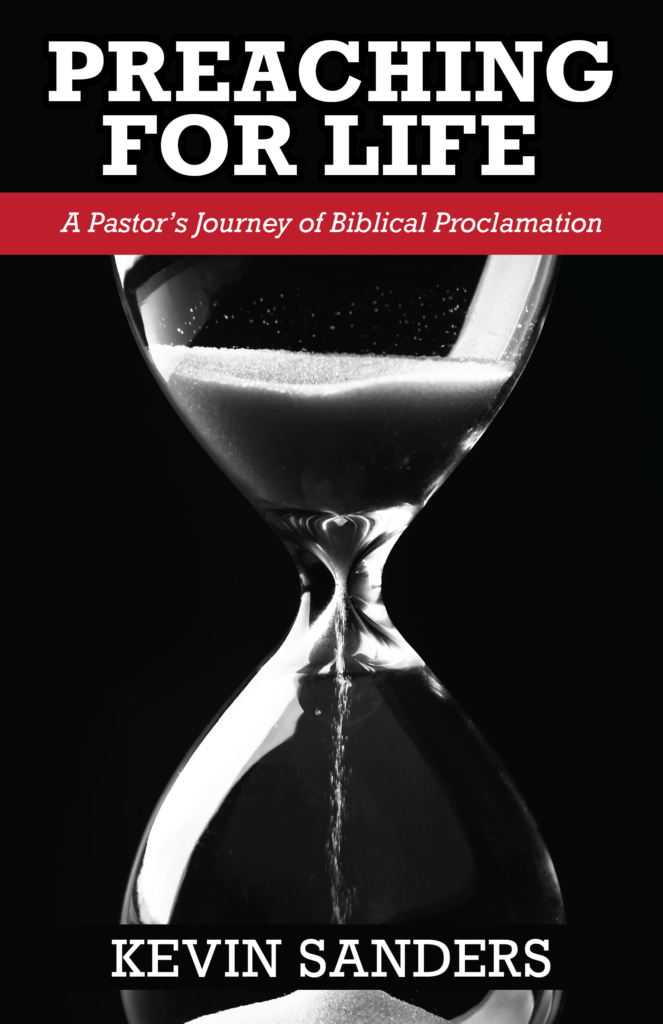
My book Preaching for Life has a chapter entitled: “Addressing Social and Political Issues.” I don’t pretend to have this issue completely figured out, but I do speak as one who has seen political leaders come and go (both here and during my time as a missionary in the Philippines). The chapter includes what I believe to be valuable questions for the preacher to consider when he steps into the pulpit. I’ll share them:
Will I come across as campaigning instead of preaching?
I am currently the pastor of a multiethnic, intergenerational church. I have members that vote differently than I do, and I’m fine with that. They are every bit my brothers and sisters in Christ as those who vote more like I do. Here’s my primary concern about getting political from the pulpit: I never want someone to come to my church and get the impression that I’m more interested in influencing their vote than I am in the state of their souls. The pulpit is for the proclamation of the gospel—it is not the place for me (or you) to promote political candidates or parties.
Will what I’m about to say age poorly?
I remember attending a church service around the time of Desert Shield (a military operation in which the US and her allies expelled Saddam Hussein’s Iraqi forces from Kuwait). The preacher began (loudly) arguing that the US should have invaded Iraq and gotten rid of Hussein once and for all. (I can’t remember if there were any “amens.”) To be clear, this was not my pastor—I believe we were having some kind of community service in which a pastor from another congregation spoke. That preacher did get his wish, for better or worse, about ten years later. But thinking about that message now causes me to scratch my head. I don’t recall the message including anything about what was supposed to happen after Hussein was ousted. Who would be the new leader? What kind of government would be adopted by or imposed upon the country? How would the Sunni and Shia Muslims get along if Hussein were ousted? These were all issues the international community had to deal with after Desert Storm (a military operation in which Iraq was invaded). I’m not here to argue for or against the invasion of Iraq. My point is that the preacher should have stuck to the word of God and not used the pulpit for his political rants.
More recently, I remember some so-called “prophets” incorrectly predicting the outcome of the 2020 presidential election here in the United States. Biblically speaking, that makes them false prophets (Deuteronomy 18:22). They have permanently disqualified themselves from preaching, though I suppose most of them will continue blowing hot air for years to come.
These may be extreme examples, but they point to something we should all consider—how would this sermon sound if someone listened to it five years from now? Twenty years from now? Applications and illustrations may change, but God’s proclaimed truth should be timeless!
Is the Bible clear about this topic?
Like it or not, the Bible doesn’t clearly say what the corporate or income tax rate should be. I have my own opinion on this issue, just like you. But this is an example of an issue that is not explicitly addressed in the scripture (at least, not as explicitly as some claim). I cannot say, “Thus says the Lord” on these and many other public policies.
There are issues that the Bible is perfectly clear about. Consider this statement from Genesis:
So God created man in his own image, in the image of God he created him; male and female he created them.
-Genesis 1:27
I am completely convinced, based on God’s word, that people are made in God’s image and are therefore valuable. I have no qualms about calling abortion evil (which I have done from the pulpit) since it is the taking of a human life made in God’s image. This verse also teaches that God created us male and female. This biological reality was not the least bit controversial until recently. I have on more than one occasion stated that radical gender ideology is rebellion against the clear design of our Creator and is destructive—especially in the way it is impacting this generation of children.
I don’t consider it a political statement when I preach on abortion, gender ideology, or homosexuality. I consider these biblical truths that have political implications. These may be controversial issues in the sphere of public debate, but they are settled in God’s word, and we should unapologetically preach about them from the pulpit.
Am I elevating my political party or candidate’s ideology above the word of God?
I have strong Libertarian (not to be confused with liberal) tendencies in terms of how I view the role of government. But Libertarians have a saying that I can’t fully endorse: “Taxation is theft.” I know taxation sure feels like theft, but Jesus said this when asked about taxes: “Therefore render to Caesar the things that are Caesar’s, and to God the things that are God’s” (Matthew 22:21b). Based on my Lord’s words, I believe the government has the right to impose taxes. That means I can’t completely embrace and repeat (or repost) every slogan that comes from Libertarian websites or social media accounts. I mentioned this to my congregation when I preached on Matthew 22:15-22.
Just to be clear, I’m not saying that Jesus’ words mean we have no right to influence our tax system—that’s what voting and political involvement are for. I’ll go further and say it’s perfectly legal and within your rights to voice your concerns about high taxes, unfair taxes, or misuse of government funds. But what we must not do is embrace any political mantra or ideology that contradicts the clear teachings of scripture.
Will I come across as having selective righteous indignation?
We all have our political biases, and these biases can cause serious inconsistencies in our praise or criticism of politicians (or political parties). I’ve seen well-known Christian leaders/authors write extensive criticism of one president, then treat the next president with kid gloves. Perhaps there is a time and place to criticize the actions of politicians, but I believe we should be as fair and consistent as possible. This is one of the many reasons I typically do not praise or bash politicians from the pulpit or even from my social media accounts. Kevin DeYoung has offered some wise words in this regard:
Only rarely will it be worthwhile for pastors to weigh in on some political matter immediately (other than lifting up many things to God in our public and private prayers). I don’t regret trying to address topics like abortion, transgenderism, race, or homosexuality, even if these can be called “political” topics. I do regret the times I’ve jumped in too quickly into the news cycle or offered my opinion too freely on individual politicians, if for no other reason than once you set yourself up as “a guy who comments on things all the time,” people can reasonably wonder why you comment on some things and some people and not on others.
Am I modeling civil discourse (including my life away from the pulpit)?
I have encouraged my congregation to talk about policies instead of personalities when it comes to political discussions. It takes zero effort to find a meme of your most hated politician in diapers and share it online. But we, God’s people, should show more respect and maturity. We should focus on clearly articulating what we value instead of engaging in the typical mindless online mudslinging that is all too common in today’s world.
These questions are an excerpt from Preaching for Life: A Pastor’s Journey of Biblical Proclamation. The book is available in both Kindle and hard copy formats.