The last week or two has been filled with tragic news. If you’re like me, you may be wondering what this world is coming to. I can’t blame you.
I have decided not to say much on social media, but I do grieve deeply and pray for the families who have lost loved ones in the senseless violence.
But I’ve also found comfort in a place that may surprise you, a parable of Jesus known as the Parable of the Weeds (also known as the Parable of the Wheat and the Tares):
24 Here is another story Jesus told: “The Kingdom of Heaven is like a farmer who planted good seed in his field. 25 But that night as the workers slept, his enemy came and planted weeds among the wheat, then slipped away. 26 When the crop began to grow and produce grain, the weeds also grew.
27 “The farmer’s workers went to him and said, ‘Sir, the field where you planted that good seed is full of weeds! Where did they come from?’
28 “‘An enemy has done this!’ the farmer exclaimed.
“‘Should we pull out the weeds?’ they asked.
29 “‘No,’ he replied, ‘you’ll uproot the wheat if you do. 30 Let both grow together until the harvest. Then I will tell the harvesters to sort out the weeds, tie them into bundles, and burn them, and to put the wheat in the barn.’”
-Matthew 13:24-30 NLT
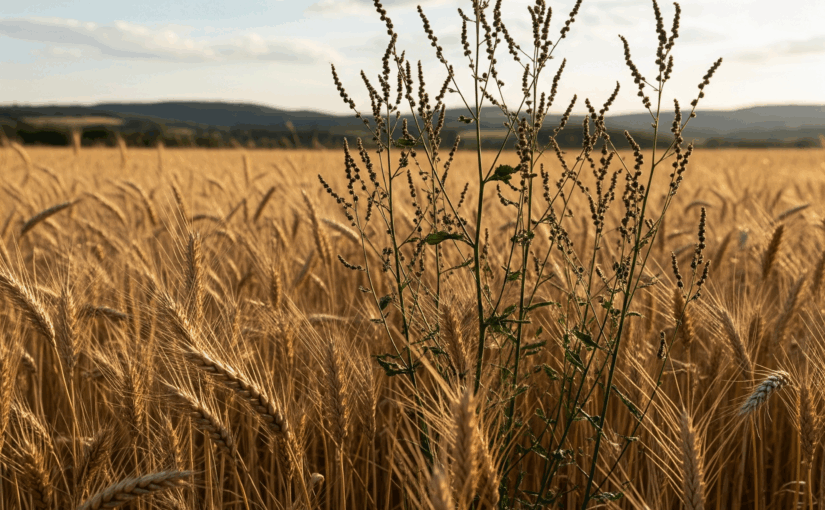
The scene Jesus presented in this parable would have been familiar to His ancient audience. A farmer planted wheat (good seed), but his enemy sowed weeds. This unwanted plant refers to the darnel weed. This weed is poisonous, but looks so much like wheat in the early stages that you can’t tell the difference between the two.
The planting of this kind of weed in someone’s field was a way to destroy or greatly reduce the value of your enemy’s crop. It happened frequently enough that there was a law against it in the Roman empire.
But the wise farmer knew that intervening prematurely would result in the loss of perfectly good wheat. He said in effect,“I’m still interested in all that wheat that’s planted out there.”
Herein lies the lessons that encourage me greatly:
The presence of evil in this world does not negate what God is doing in this world. The presence of evil does not nullify God’s redemptive activity.
Yes, wicked people are becoming bolder, more perverse, and more hostile to all that is good. In that sense it seems the world is getting worse.
But here’s a question we must consider: are the “weeds” the only thing growing? No!
God has not given up on the harvest—neither should we!
God has sovereignly allowed evil for a season. He has temporarily allowed good and evil to coexist. One day there will be an awesome judgement in which God will separate wheat from weeds; good from evil (vs. 37-43). Until then, let’s not forget the words of Jesus:
“The harvest is great, but the workers are few. So pray to the Lord who is in charge of the harvest; ask him to send more workers into his fields.”
-Luke 10:2b
Let us not be guilty of only seeing the weeds and overlooking the wheat.