I thank my God in all my remembrance of you . . .
-Philippians 1:3
“This is what the past is for! Every experience God gives us, every person He puts in our lives is the perfect preparation for the future that only He can see.” ― Corrie Ten Boom
Insomnia and Nostalgia
I took a trip down memory lane a few months ago.
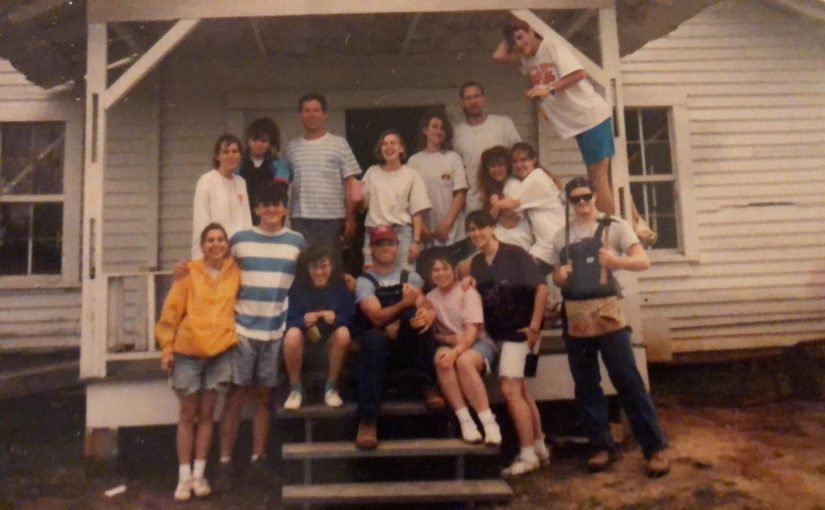
It started when I couldn’t sleep in the middle of the night. I began thinking about a mission trip I went on during my college years. A group of us from the Baptist Campus Ministries of the University of Alabama went to do ministry in the Bogue Chitto Choctaw community (located near Philadelphia, Mississippi).
I patched together memories and came to the conclusion that this trip happened in ’93. But I wasn’t 100% sure, and that was as good of a question as any to ponder on a hot, sleepless night in El Paso.
I started a Facebook chat with a few of my old college friends the next morning. They confirmed Spring Break of ’93 as the correct time/decade. We began exchanging stories, then photos. Vivid memories, over 25 years old, came back to visit.
That week profoundly affected all of us. It was my first time to minister to people that grew up in a culture so significantly different from my own (complete with their own language). I’m sure it was a small part of God’s preparation for a future missionary.
It also turned into my first opportunity to have my writing published. Heather, one of my fellow students, had taken pictures and had the opportunity to have them printed in a Christian magazine. She called me and asked if I’d be interested in writing the article to go with her photos. I jumped at the chance.
The following article, entitled Scars of a Nation, was published in The Student magazine (a Lifeway publication) in August, 1994. I have included some of Heather’s pictures as well:
The 1994 Article
I have been on seven SPOTS (Special Projects Other Than Summer) trips during my four years of college and consider myself a SPOTS veteran. I have seen God working in vastly different parts of the country, from inner-city East St. Louis to the small town of Winder, Georgia. This is my account of our trip to the Bogue Chitto Choctaw Reservation near Philadelphia, Mississippi. It was one of the shorter trips I’ve taken in terms of distance, but I traveled to a different world.
 We were told that the project would involve “light construction.” Our first day on the job taught us to accept quite a liberal definition of “light construction” as we began tearing down the old, rotted exterior of a small church. More frightening was the fact that we would be replacing the old wood with new siding. I was put in charge of this work crew for reasons unknown—perhaps I didn’t look “constructively challenged” in my borrowed overalls.
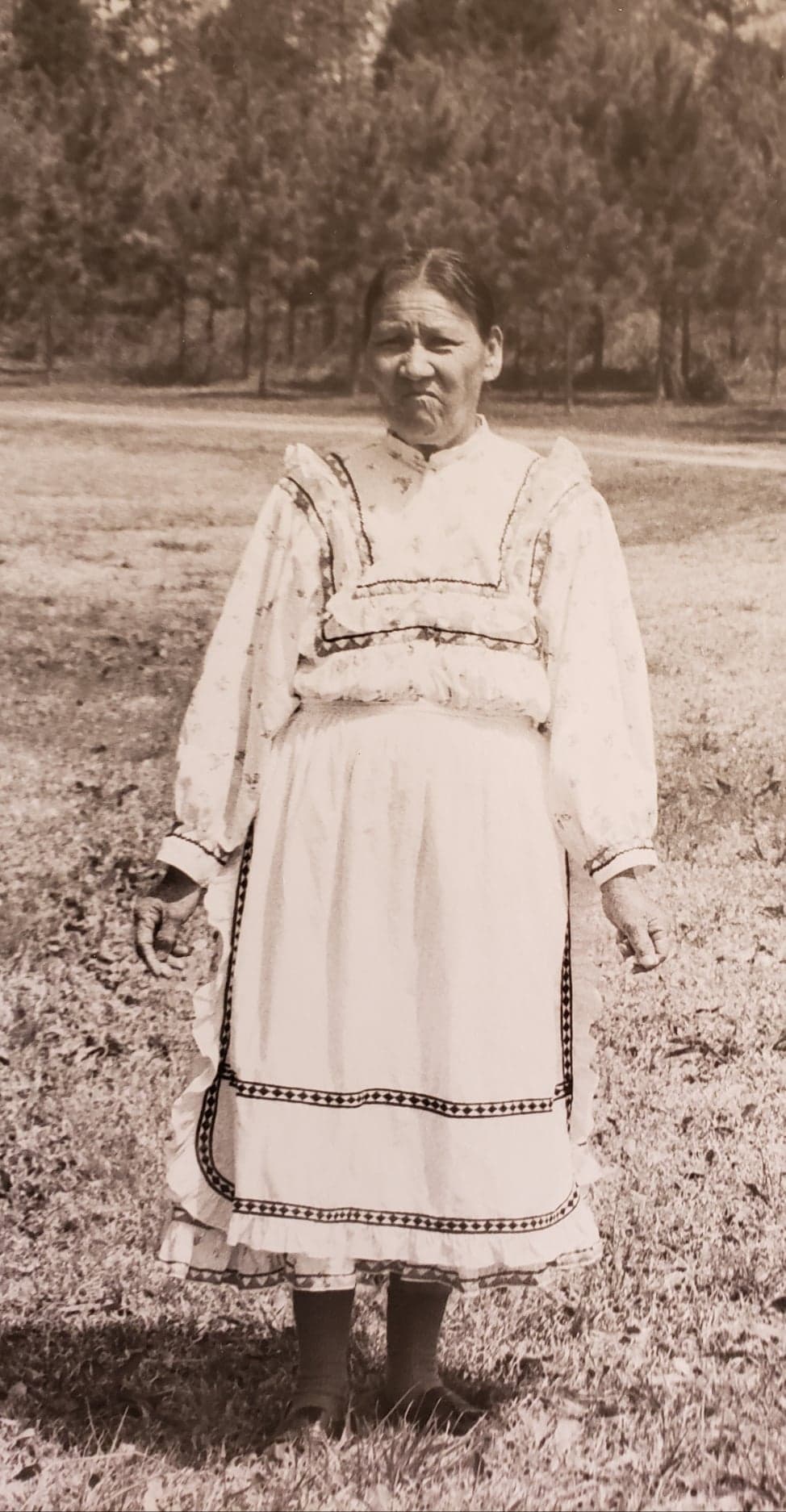
We began the fascinating process of learning about the Choctaw people as we worked. Delays in construction provided opportunities to speak with the Choctaw and ask about their unique culture. Bill, our director of student ministry, inadvertently broke the ice by stating that there were “too many chiefs and not enough Indians.” To his surprise, the Choctaw found his politically incorrect joke quite amusing.
Getting to know the people proved challenging, yet rewarding. The process began with adapting to a new language. They spoke their native Choctaw tongue and English, but we quickly learned that these two languages were not mutually exclusive. English phrases could be identified in the midst of an otherwise indiscernible sentence. Words such as “faith” and “Christian” could be heard in an exclusively Choctaw sermon. They had apparently never developed a Choctaw equivalent to some English words and simply used the English word. This hybrid of Choctaw and English was intriguing.*
Bill and I thought we were making some linguistic progress. We constructed a simple sentence using a few Choctaw words learned during the week. We were embarrassed to learn that we had constructed our meager sentence incorrectly and we were saying it backward for all practical purposes. I suppose I should not have been surprised, since I could not even pronounce the name of the reservation without drawing laughter from the children.
The Choctaw food was another example of cultures merging. Their fried chicken was some of the best I’ve ever tasted. I was also introduced to a stable of the Choctaw diet known as frybread. Frybread has the texture of a doughnut and is shaped like a very thick pancake. As the name implies, it is prepared by dropping the mass of dough into a pan full of hot lard. Though not recommended by your local cardiologist, it was in high demand by both Choctaws and students.
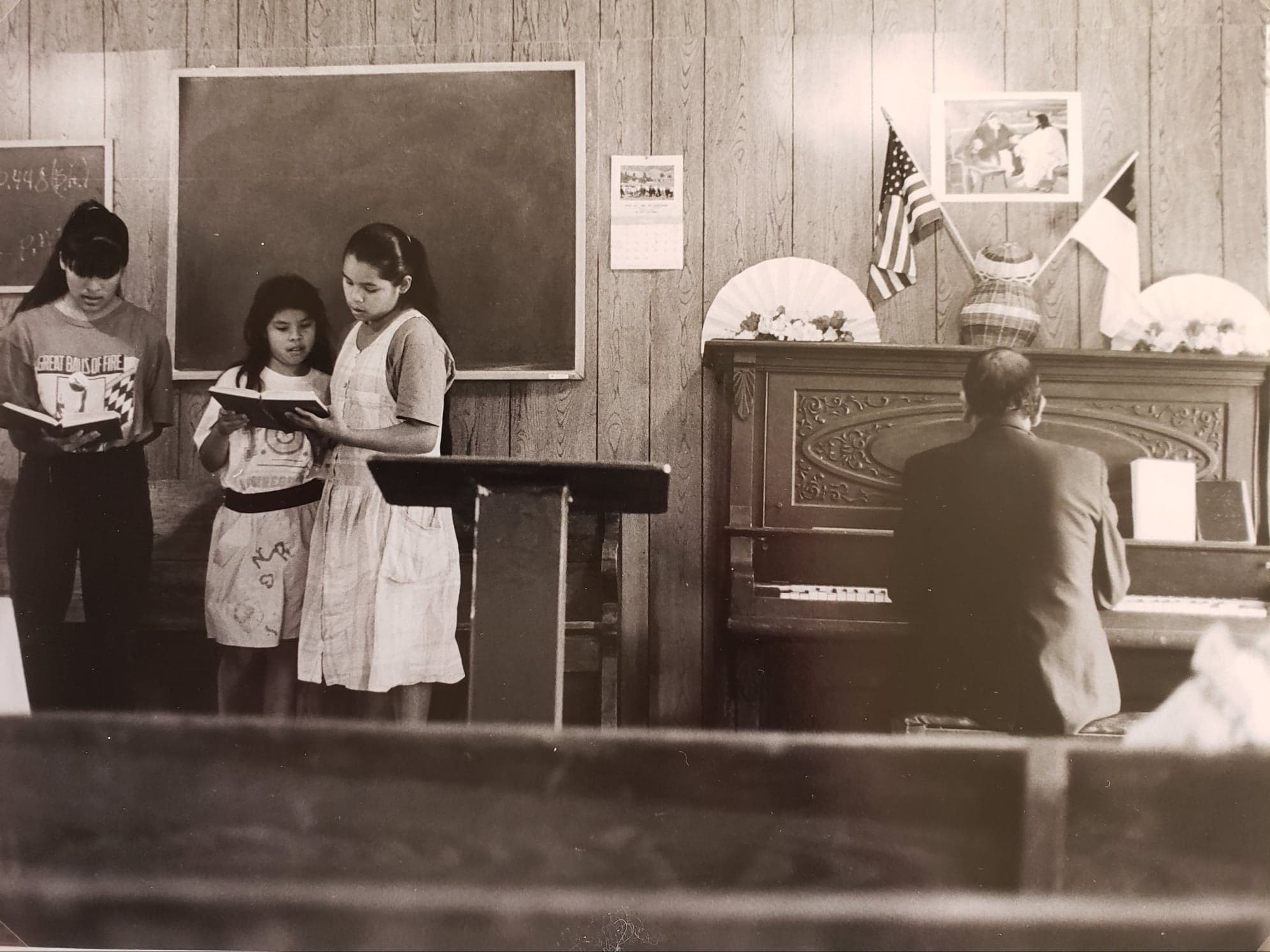
We also had the opportunity to experience a Sunday worship service with the Choctaw. It was amazing to see that people from totally different worlds could unite together to worship the One true God. We shared song and drama (skits) with the Choctaws and in return heard song and traditional hymns in their language.
The children almost instantly adored us and took up any time not spend in construction. They were especially fond of Trent, our class clown and camera man. Jeff and I drew attention from being fitness minded. While neither of us have world-class physiques, the Choctaw children were impressed and continually asked us to flex our biceps.
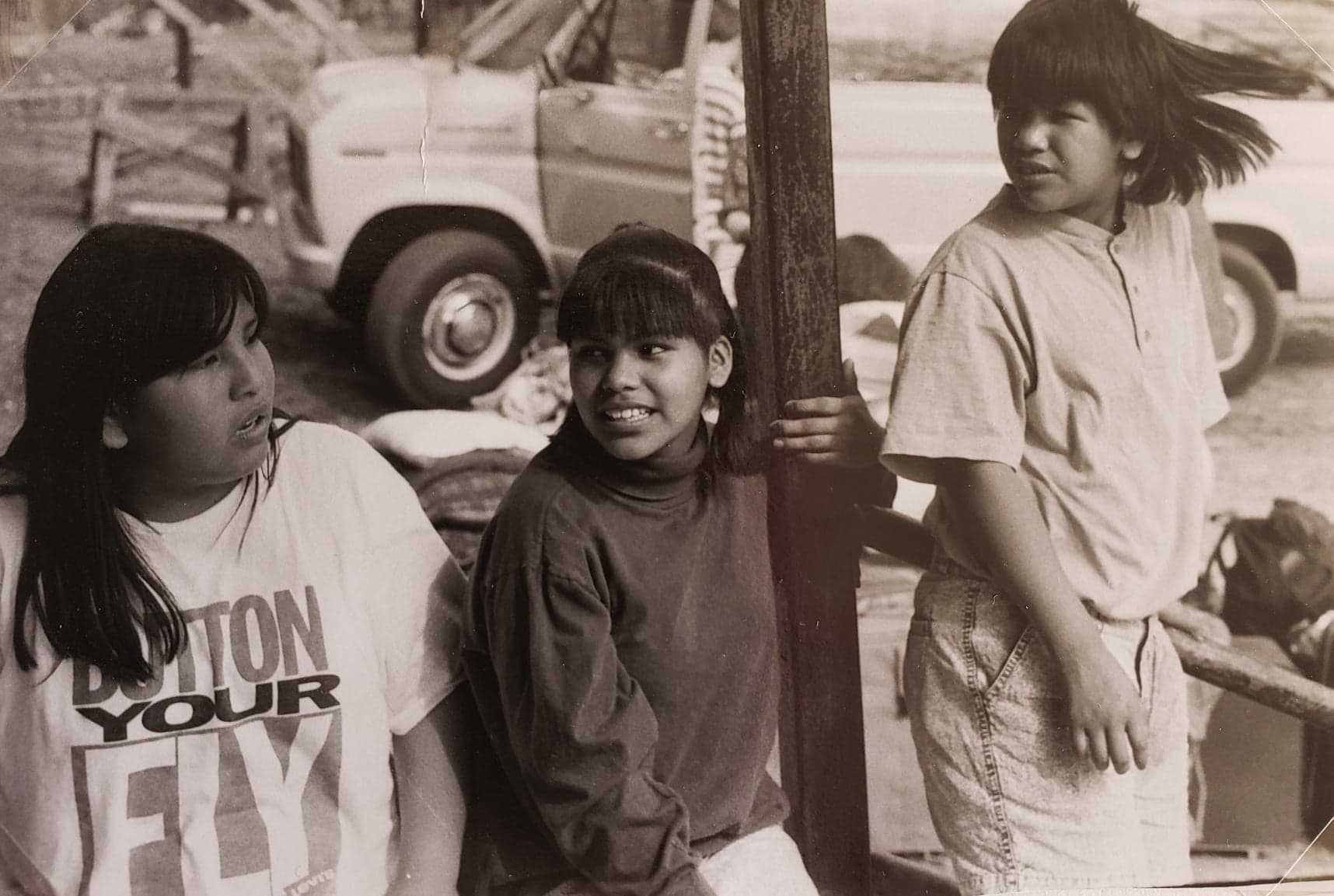
The children were also taken back by another difference in our physical appearance. I am extremely fair-skinned, and hours of outdoor construction resulted in a very nasty sunburn. I was in the last in line for shower one evening at a church members home, which gave the children time to learn of our location and gather at the house. The steamy shower added to my sunburn—I resembled a tomato with eyes. The dozen or more children gazed with saucer-sized eyes as the freshly cleaned, giant lobster presented himself in the living room. Stunned as they were, the children still requested another exhibition of my now famous biceps.
Adults and children came together to teach us more about their culture in the last few days of the trip. A special assembly at the school featured a demonstration of their ancient dances, complete with drummer and changer. We were introduced to stick ball, and ancient Native American sport which resembles lacrosse. The two churches with whom we worked prepared special suppers for us on our final two nights and presented special parting gifts as we said painful goodbyes.
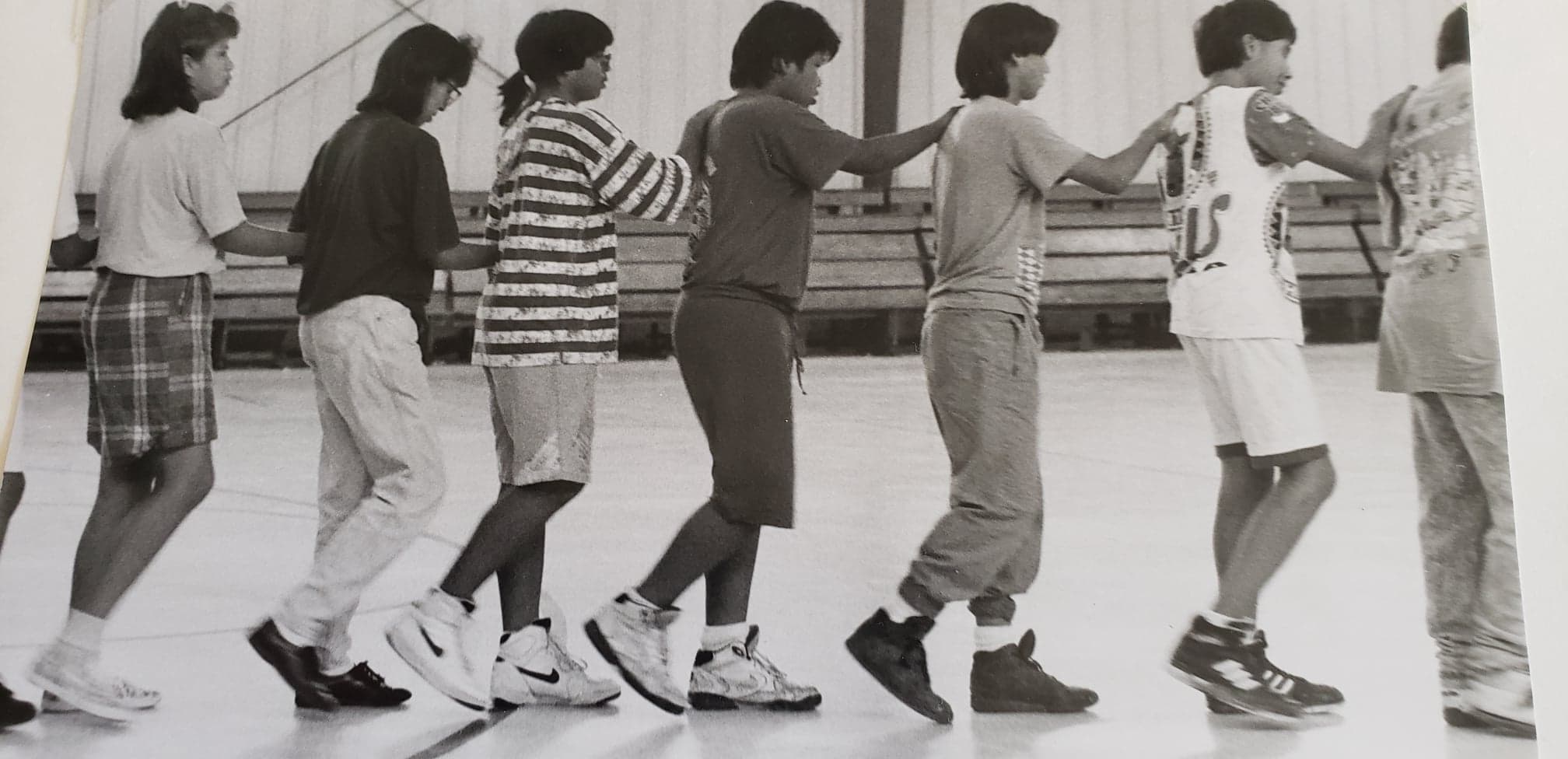
I will never forget their faces. Often the Choctaw showed little or no emotion, yet their faces were full of life with a mysterious, silent strength. Their countenance was marked with the scars of a nation, yet contained hope for the future and faith in the eternal. Their eyes were full of character produced by lack of material things and abundance of sacred intangibles. The children’s smiles were like the laughter of angels.
God moved in our own hearts in a powerful way, just as He moved in the lives of the Choctaw with whom we worked. We saw Him at work in a more external fashion when we prayed for predicted rain to be delayed. We needed to work until noon and the rain held off until 12:01. Knowing we would not be able to shower before our afternoon trip, some of us stood in the rain and let it wash off our sawdust. You might call this coincidence, but we considered the delay an answered prayer.
One brief article cannot fully describe what I experienced on just one SPOTS (Special Projects Other Than Summer) trip, and there have been others just as memorable. Give God a few days during your next school break and be prepared for Him to bless you beyond your expectations.
Back to the Present (2019)
I can’t decide if it feels like this mission trip happened yesterday or another lifetime. The latter, I suppose.
People look at old photos of me like this one and immediately notice the thick hair I once had. I see something else: insecurity, self-righteousness, and a myriad of other issues that plagued this younger version of me.
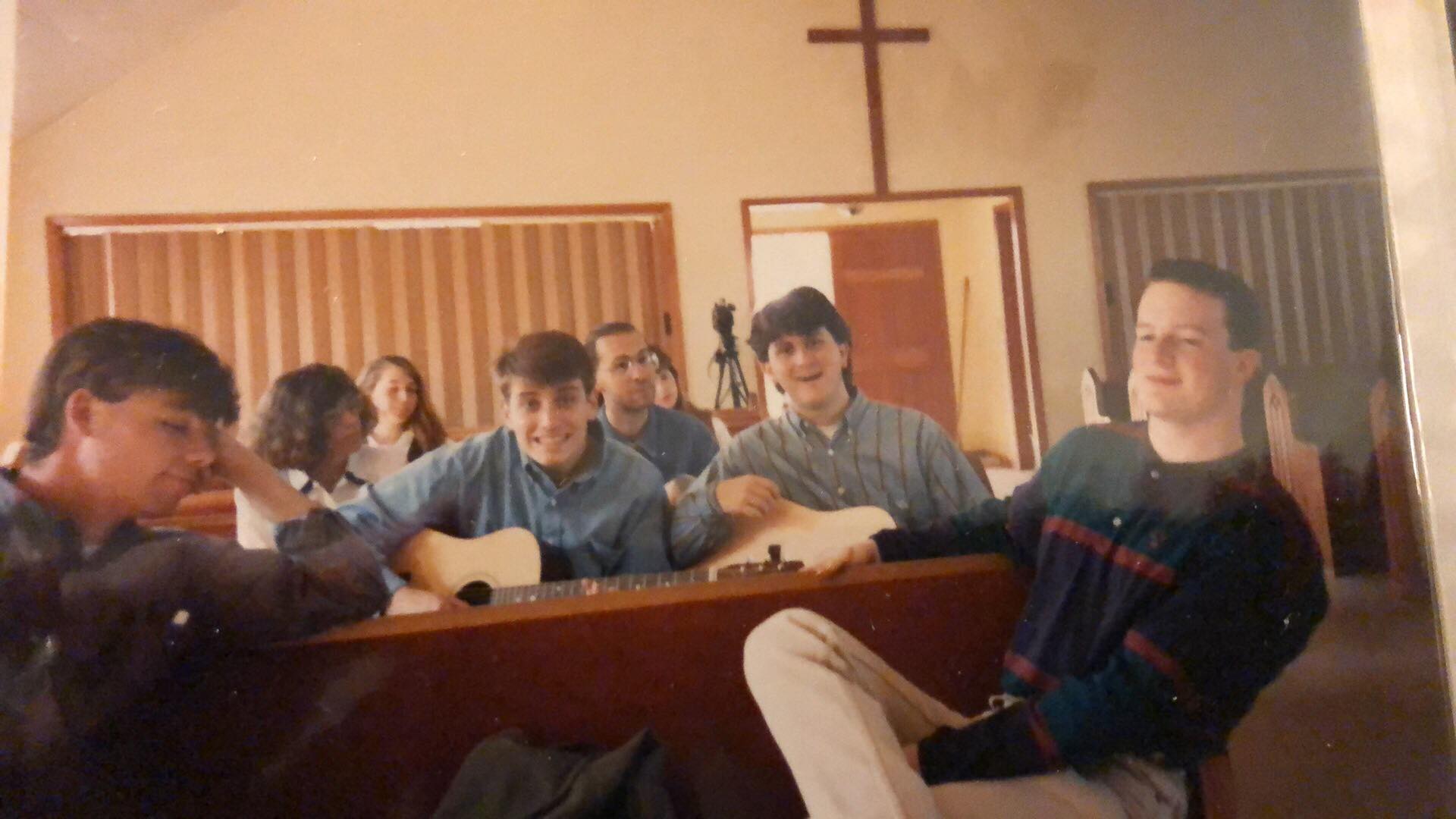
That’s not to say I’m free of these flaws now. But I’d like to think I’m at least more aware of them and more appreciative of the amazing grace that’s needed to cover them. Sanctification is a lifelong process, and God has proven Himself to be very patient with a man like me.
I’m sure I would do at least a few things a little differently if I had my college years to live over. This trip is not one of them. I wouldn’t change one drop of sweat, one hammered nail, one bite of frybread, or one prayer.
But I probably would have brought more sunscreen.
*This mixing of languages would reappear later when I went to the Philippines. Filipinos frequently mix English with Tagalog, calling it “Taglish.”